

The Timeless Beauty of the Taj Mahal
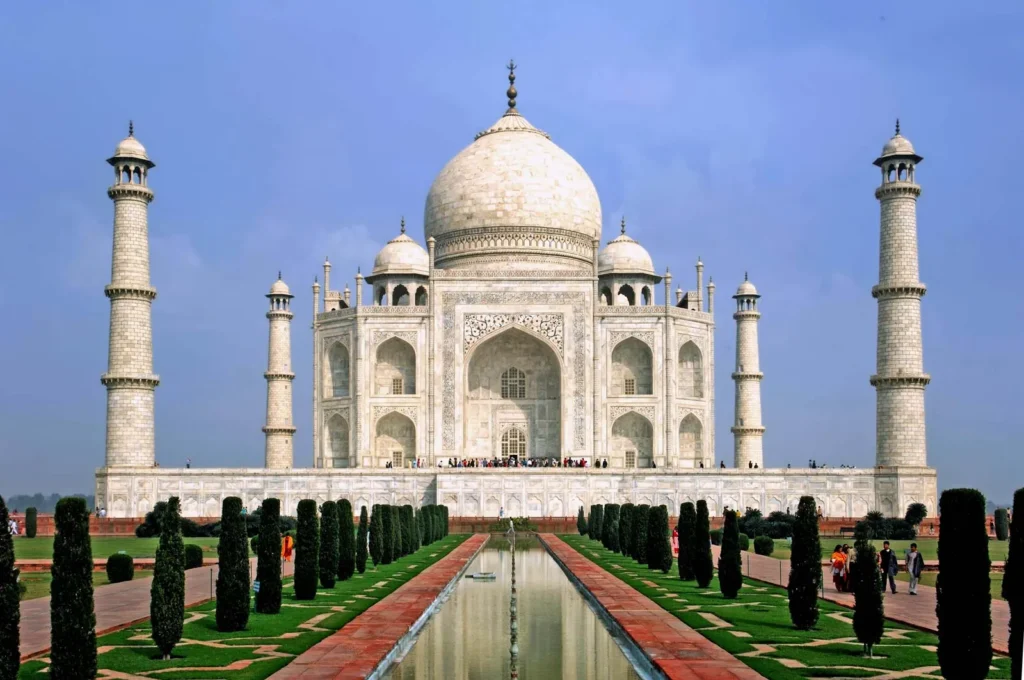
The Taj Mahal, often referred to as a symbol of eternal love, is a stunning architectural marvel that attracts millions of visitors from around the globe each year. This magnificent structure was commissioned by Mughal Emperor Shah Jahan in memory of his beloved wife, Mumtaz Mahal, and its construction began in 1632, reaching completion in 1648. The Taj Mahal is not only a mausoleum but also a testament to the artistic and architectural prowess of the Mughal era, representing a harmonious blend of Persian, Islamic, and Indian architectural styles.
As one approaches the Taj Mahal, its pristine white marble façade glistens under the sun, creating an enchanting display that changes in appearance throughout the day. The intricate details of the structure are truly mesmerizing; the marble is adorned with finely carved reliefs and inlaid with semi-precious stones, forming intricate floral patterns and calligraphy that showcase the utmost craftsmanship of the period. The symmetrical gardens, reflecting pools, and grand entrance gates enhance the allure of the monument, making it a quintessential example of Mughal landscaping, which reflects serenity and tranquility.
The architectural brilliance of the Taj Mahal is evidenced through its innovative design, including the use of an intricately geometrical layout that incorporates elements of symmetry and proportion. Its central dome, flanked by four smaller domes, rises majestically and is surrounded by four minarets, each standing tall and featuring a slight outward tilt to ensure stability. The Taj Mahal was designated a UNESCO World Heritage Site in 1983, further solidifying its importance as a cultural and historical icon, drawing not just admirers of architecture, but also those who appreciate love stories woven into the fabric of human history.
The Legend of Shah Jahan and Mumtaz Mahal
The Taj Mahal stands not only as a symbol of architectural brilliance but also as a testament to an everlasting love story between Emperor Shah Jahan and his wife, Mumtaz Mahal. Their romance began when they were both young, and it blossomed over years into a profound partnership marked by mutual respect and admiration. Shah Jahan was captivated by Mumtaz Mahal’s beauty and intelligence, and their bond deepened through shared joys and challenges.
As the years went by, the couple had numerous children and faced the complexities of ruling an empire. Despite the demands of their royal life, Shah Jahan and Mumtaz Mahal remained devoted to one another. However, their idyllic life took a tragic turn when Mumtaz Mahal fell ill after giving birth to their fourteenth child. Her passing in 1631 devastated Shah Jahan, who was inconsolable in his grief.
Driven by sorrow and remembrance, Shah Jahan sought to immortalize his beloved wife’s memory. This led to the ambitious endeavor of constructing the Taj Mahal, a grand mausoleum that would serve as a final resting place for Mumtaz Mahal. The project began in 1632 and was executed with meticulous attention to detail, employing thousands of artisans and employing precious materials, including white marble that lends the structure its ethereal glow. The completion of the Taj Mahal in 1653 marked not only a significant architectural achievement but also a powerful statement of love that transcends time.
The story of Shah Jahan and Mumtaz Mahal continues to resonate, with the Taj Mahal embodying their enduring love. The monument is a poignant reminder of the lengths to which a grieving husband would go to honor the deceased, encapsulating a tale that melds romance with history.
Construction of the Taj Mahal: A Marvel of Engineering
The construction of the Taj Mahal commenced in 1632 and was overseen by the Mughal Emperor Shah Jahan as a mausoleum for his beloved wife, Mumtaz Mahal. This architectural wonder was completed in 1648, though some parts of the complex remained unfinished until 1653. The scale and grandeur of the Taj Mahal reflect the pinnacle of Mughal architecture, marrying Persian, Indian, and Islamic styles, making it a remarkable monument throughout history.
The primary material used in the Taj Mahal’s construction was white marble, sourced from Makrana in Rajasthan. This marble was called ‘Makrana marble’ and is renowned for its high quality and ability to reflect different shades according to the time of day, adding to the monument’s ethereal beauty. Additionally, red sandstone and various semi-precious stones—such as lapis lazuli, jade, and agate—were intricately inlaid into the marble surfaces, showcasing the lapidary skills of artisans of the time.
A workforce of approximately 20,000 artisans, laborers, and craftsmen contributed to the Taj Mahal’s construction. The project attracted skilled individuals from diverse regions, including calligraphers, inlayers, stone carvers, and architects. The labor force utilized advanced techniques and tools that were incomparable for the era. Notably, the use of a scaffolding system and cantilevered beams allowed for the intricate design and elevation of the dome, which remains one of the tallest in the world at the time.
Innovative architectural methods such as using water level and compass ensured precision, and the symmetrical layout of the surrounding gardens exemplified a deep understanding of landscape design. The colossal project displayed not only artistic extravagance but also engineering prowess that continued to inspire many generations of architects and builders. Such efforts culminated in a masterpiece that stands as a global emblem of love and devotion, rooted in historical significance.
Symbolism and Design: What the Taj Mahal Represents
The Taj Mahal is more than just an architectural marvel; it embodies deep symbolism rooted in the love story between Shah Jahan and his beloved wife, Mumtaz Mahal. This mausoleum serves as a poignant reminder of loss, mourning, and the everlasting bond that transcends the physical realm. With its intricate design and thoughtful layout, the Taj Mahal represents the pinnacle of Mughal architecture and serves as a testament to the enduring power of love.
The garden that surrounds the Taj Mahal plays a crucial role in its symbolic meaning. Designed as a paradise on Earth, it reflects the Islamic concept of *Jannah*, or heaven. The meticulously laid out gardens not only enhance the beauty of the structure but also embody the spiritual journey toward a divine realm. The pathways, representing life’s journey, lead to the stunning white marble edifice, symbolizing purity and the eternal bond shared between husband and wife, even in death.
Water features further enhance the imagery presented by the Taj Mahal. The long reflecting pool, which aligns perfectly with the mausoleum, serves to beautifully mirror the grandeur of the structure. Water in Islamic culture represents life and purification, adding another layer of meaning to the design. The harmonious interplay of water and architecture emphasizes balance and tranquility, inviting visitors to reflect on the poignant story behind this iconic monument.
The Taj Mahal’s overall layout adheres to Islamic principles, characterized by symmetry, proportion, and geometric beauty. These elements are not just aesthetic choices but integral components that speak to the civilization’s ethos. Each aspect of the Taj Mahal, from the gardens to the water features, resonates with themes of love, loss, and the quest for immortality, solidifying its status as a symbol of a transcendent love story.
Interesting Facts about the Taj Mahal
The Taj Mahal, often referred to as a symbol of love, is not just an architectural masterpiece but also a treasure trove of intriguing facts that many visitors may not be aware of. One remarkable feature of the Taj Mahal is its mesmerizing ability to change colors throughout the day. In the morning, the monument appears in soft pastel hues, transitioning to brilliant white at noon, and taking on shades of pink and orange at sunset. This phenomenon is due to the high-quality marble used in its construction, which reflects light in unique ways depending on the sun’s position.
Additionally, the Taj Mahal is home to a fascinating optical illusion. From certain angles, the dome appears perfectly round, while from others, especially from the ground level, it presents a slightly elongated shape. This intentional design creates a stunning visual impact that leaves visitors in awe of the architectural ingenuity employed in its construction.
Furthermore, rumors and legends surround the Taj Mahal, adding to its mystique. One common misconception is that Shah Jahan intended to build a black marble counterpart on the opposite bank of the Yamuna River to serve as his mausoleum. However, this story has been debunked by historians who found no evidence supporting such an extravagant plan. Instead, what is true is that the Taj Mahal is set within a grand garden that symbolizes paradise, meticulously designed in accordance with Mughal architectural principles.
Another interesting aspect is the intricate calligraphy adorning the walls of the Taj Mahal, which showcases verses from the Quran. The artistry found in these inscriptions not only enhances the beauty of the monument but also signifies the deep spiritual connection inherent in the mausoleum. As a whole, these compelling factors contribute to the overwhelming allure of the Taj Mahal, captivating the hearts of millions who visit this architectural wonder each year.
Cultural Significance and Global Impact
The Taj Mahal stands not only as a marvel of architectural excellence but also as a profound symbol of cultural significance, resonating deeply within India and across the globe. Constructed in the 17th century by Emperor Shah Jahan in memory of his beloved wife, Mumtaz Mahal, this monument embodies the essence of love, making it a timeless representation of commitment and devotion. Each year, millions of visitors flock to Agra to witness the shimmering beauty of its marble façade, experiencing firsthand the emotions that the structure evokes. This immense tourist attraction has substantially contributed to India’s economy while bolstering awareness of its rich cultural heritage.
Moreover, the Taj Mahal’s influence extends beyond tourism; it has made indelible marks on art, literature, and popular culture. Artists have drawn inspiration from its elegant proportions and intricate designs, leading to myriad interpretations in paintings and sculptures. Authors, too, have found the story behind the Taj Mahal an irresistible motif, weaving tales that reflect its romantic aura. In cinema, the Taj Mahal often serves as a backdrop to love stories, further embedding it in the fabric of popular culture. Such depictions continuously sustain the monument’s status as a universal icon of love.
The global impact of the Taj Mahal is also reflected in the representations of love it inspires in various cultures. The notion that the monument encapsulates eternal love has crossed borders, creating a universal narrative that transcends geographical and cultural boundaries. This phenomenal recognition has not only enhanced the prestige of India on the world stage but has also served as a reminder of the importance of cultural conservation in a rapidly modernizing world. As we delve into exploring this magnificent structure, we come to appreciate its profound significance in both historical and contemporary contexts.
Preservation Efforts: Protecting a National Treasure
The Taj Mahal, a UNESCO World Heritage Site, is an architectural masterpiece that embodies the grandeur of Mughal architecture. However, it is increasingly threatened by environmental pollutants, urbanization, and the influx of tourists. As a result, various preservation efforts have been initiated to safeguard this national treasure. The Government of India has been at the forefront of these initiatives, implementing stringent regulations to control pollution in the vicinity of the monument.
One of the notable measures has been the implementation of the Taj Protected Area, which aims to regulate industrial activities impacting the monument. This initiative not only curtails air and water pollution but also preserves the integrity of the intricate marble inlays and the surrounding gardens. The use of eco-friendly cleaning techniques has become essential in restoring the pristine condition of the Taj Mahal’s façade. Traditional cleaning methods, often involving harsh chemicals, can cause more harm than good, leading to further deterioration of the stone.
In addition to governmental efforts, various non-governmental organizations (NGOs) have played a pivotal role in raising awareness about the need for preservation. They engage in community outreach programs that educate locals and tourists about the cultural significance of the Taj Mahal and the necessity of maintaining its condition. Through partnerships with the Archaeological Survey of India, these NGOs contribute to monitoring and documenting changes in the structure, ultimately ensuring that any potential risks are addressed promptly.
The challenge of balancing tourism with preservation is also addressed through strategic planning. Tourists are now encouraged to visit during off-peak hours, reducing foot traffic that can lead to wear and tear on the site. Furthermore, limit measures on visitor numbers are being considered to ensure that the Taj Mahal remains a symbol of enduring love and architectural brilliance for future generations.
Visitor Experience: Tips for Exploring the Taj Mahal
Visiting the Taj Mahal is a unique experience, and planning your visit can significantly enrich your time at this iconic monument. The best times to explore the Taj Mahal are during the early morning hours or late afternoon. These times not only help in avoiding the crowds but also offer a softer light for photography, enhancing the intricate details of this architectural marvel.
Upon arrival, it is advisable to enter through the East or West gates, as these tend to be less congested compared to the main entrance. Be prepared for security checks, which are thorough yet swift. Within the premises, taking a leisurely stroll through the lush gardens will prepare you for the breathtaking view of the monument. Make sure to take in the reflections of the Taj Mahal in the water channels, as these provide stunning photographic opportunities.
When touring the Taj Mahal, consider hiring an official guide who can share insights about the historical significance and architectural brilliance of the monument. Understanding the symbolism embedded in the Taj Mahal’s design can greatly enhance your appreciation of its beauty. Look out for the intricate marble inlay work, which is a hallmark of Mughal artistry, as you explore the mausoleum.
For the best photographic angles, capture the Taj Mahal from the main entrance, showcasing the symmetry of its gardens and pathways. Additionally, the view from behind the monument, especially at sunset, offers dramatic perspectives that are less commonly seen. Nearby attractions such as the Agra Fort and the Tomb of Itimad-ud-Daulah can also provide a comprehensive understanding of Mughal architecture and history. Combining these visits can make for a fulfilling experience that goes beyond the Taj Mahal alone.
Conclusion: The Enduring Legacy of the Taj Mahal
The Taj Mahal stands as an enduring symbol of love and architectural excellence, weaving together threads of history and artistry that have captivated millions throughout the centuries. This remarkable monument, commissioned by Emperor Shah Jahan in memory of his beloved wife Mumtaz Mahal, seamlessly blends Persian, Islamic, and Indian architectural elements, creating a unique aesthetic that is unparalleled in the world of heritage sites. The famous white marble facade, intricately embellished with precious stones, reflects the skill and craftsmanship of artisans who dedicated their lives to this monumental project.
As we explored the rich history behind the Taj Mahal, it became clear that this UNESCO World Heritage site is not merely a mausoleum; it is a testament to the emotional depth of human experience and the longing for eternal remembrance. The monument symbolizes the profound bond between love and loss, serving as a poignant reminder of the power of love to transcend time and space. Furthermore, the surrounding gardens and reflective pools enhance its serene beauty, inviting visitors to pause and absorb the atmosphere of tranquility.
In light of its historical significance and architectural brilliance, the Taj Mahal faces numerous challenges in the modern era, including environmental degradation and the impacts of tourism. This emphasizes the importance of collective efforts to protect, preserve, and honor cultural landmarks like the Taj Mahal for future generations. As stewards of our world heritage, it is our responsibility to appreciate these remarkable sites, ensuring they remain cherished legacies that inspire and educate. The Taj Mahal, with its rich narrative, continues to encapsulate the essence of love, history, and artistry, urging us all to contribute to its preservation.
Reference
Wikipedia https://en.wikipedia.org/wiki/Taj_Mahal

Sandeep Raiza — Content Writer, Website Designer, SEO Strategist, and WordPress Expert AI specialist delivering impactful digital solutions that drive business growth.Combining creative storytelling with technical expertise.