
Pakistan Deploys 10,000 Police as US‑Iran Talks Speculation Grows; No Official Date Yet
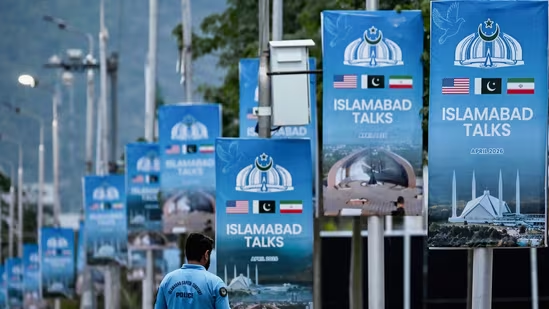
Pakistan has deployed more than 10,000 police personnel across Islamabad and its twin city Rawalpindi as speculation mounts over a possible second round of US‑Iran peace talks, even though neither Washington nor Tehran has announced a firm date. The move signals Islamabad’s readiness to host another high‑stakes negotiation, even as the government publicly insists that “no decision has been taken” on when or whether the talks will happen.
The extraordinary security buildup follows last week’s first‑ever direct US‑Iran negotiations in Pakistan, which ended without a binding agreement but opened a fragile channel between two adversaries locked in a limited war. Islamabad is now advertising itself as a neutral mediator, with Prime Minister Shehbaz Sharif personally shuttling through Saudi Arabia, Qatar and Turkiye to build consensus, while the military leadership has also made discreet visits to Tehran.
Police have set up more than 600 checkpoints across Rawalpindi and sealed off sensitive approaches to Nur Khan Airbase and Islamabad International Airport, with a midnight curfew‑style clampdown on vehicle movement and public transport in the capital zone. Authorities have ordered hotels, plazas and hostels along key routes to close temporarily, instructed shop owners not to allow unrelated visitors near the “Red Zone,” and banned all parking along the main arteries where foreign delegations are expected to move.
A senior police spokesperson told local media that the 10,000‑strong force includes elite units, plain‑clothes officers and rapid‑response teams, all operating under a “heightened alert” protocol normally reserved for the most sensitive diplomatic missions. The Serena Hotel and other probable venues are being treated under a “Blue Book”‑level security manual, the same protocol used to protect visiting heads of state and other very‑high‑risk dignitaries.
Diplomats say the scale of the deployment is unusual even by Pakistan’s standards, underscoring how much Islamabad is betting on its role as a bridge between the US and Iran. If the talks do go ahead, they could touch on everything from a durable ceasefire and withdrawal of forces to access to the Strait of Hormuz—a chokepoint through which roughly one‑fifth of the world’s oil once flowed before the conflict cut supplies.
What This Really Means For You
If you are an ordinary resident in South Asia or a global oil‑importing economy, this security surge is more than just a photo‑op for headlines; it is a sign that the US‑Iran standoff is still at a knife‑edge. Any fresh talks in Islamabad could either ease the war‑driven spike in fuel prices and shipping costs, or expose the region to another shock if the talks collapse publicly.
For someone managing a home budget, that translates into very real monthly pressure: if fuel and transport costs stay high, everything from groceries to logistics‑driven electronics will remain expensive. On the job front, a prolonged or escalated conflict could keep global markets jittery, which usually means banks, exporters and import‑dependent sectors stay cautious about hiring and investment. In short, the quiet streets of Islamabad under 10,000 police are one of the first canaries in the coalmine for how stable—or unstable—the next few months will be for your pocket and your skyline of everyday prices.
The Bottom Line
Pakistan is putting security on overdrive in Islamabad, not because the talks are officially confirmed, but because the risk of getting them wrong is too high. If these negotiations succeed, they could reshape the Gulf’s security map and oil routes; if they fail, the world may find itself staring at a longer, costlier conflict than anyone expected.
Frequently Asked Questions
Q: Are US‑Iran talks in Pakistan confirmed yet?
A: No fixed date has been announced. Pakistani officials say preparations are underway as speculation grows, but Washington and Tehran have not formally confirmed a second round.
Q: Why is Pakistan using so many police for these talks?
A: The 10,000‑strong force plus 600 checkpoints and sealed airbase approaches are meant to protect high‑ranking US and Iranian delegations and prevent any security lapse in a highly sensitive mediation process.
Q: How could this affect oil prices and fuel bills?
A: A successful US‑Iran deal could ease pressure on the Strait of Hormuz and other key shipping lanes, potentially pulling down fuel and transport costs; a breakdown could keep or push prices higher for months.
Reference
Hindustan Times — Pakistan deploys 10,000 police as US‑Iran talks speculation grows; no official date yet — https://www.hindustantimes.com/world-news/pakistan-deploys-10-000-police-as-us-iran-talks-speculation-grows-no-official-date-yet-101776577154107.html
Dawn — Over 10,000 police personnel deployed on security duty in Rawalpindi — https://www.dawn.com/news/1993151/over-10000-police-personnel-deployed-on-security-duty-in-rawalpindi
Khaleej Times — Pakistan tightens security as another US–Iran talks in Islamabad looms — https://www.khaleejtimes.com/world/asia/pakistan-tightens-security-as-another-usiran-talks-in-islamabad-looms

Sandeep Raiza — Content Writer, Website Designer, SEO Strategist, and WordPress Expert AI specialist delivering impactful digital solutions that drive business growth.Combining creative storytelling with technical expertise.