
Iran’s 10-Point Ceasefire Plan: What’s In It and Will US Agree?
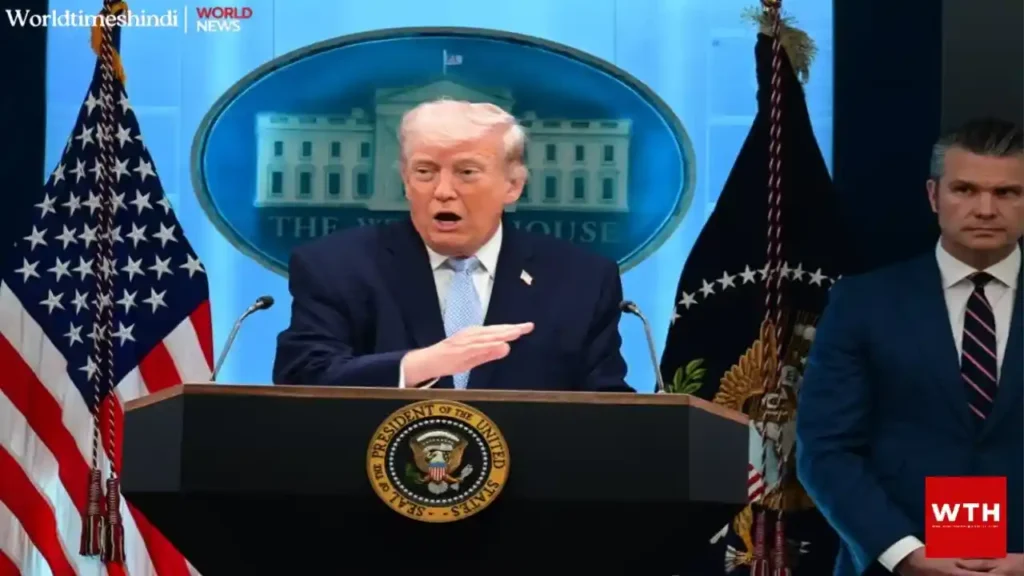
Iran has unveiled a sweeping 10-point ceasefire proposal that US President Donald Trump says Washington has accepted in principle, paving the way for a two-week truce that halts American and Israeli airstrikes effective immediately. The deal, announced Tuesday night from Washington, requires Tehran to reopen the Strait of Hormuz within hours while suspending all bombing campaigns for 14 days.
The timing could not be more significant. Trump had threatened to “obliterate” Iranian infrastructure by 8 p.m. ET if no agreement emerged — only to pivot dramatically after receiving Tehran’s proposal through Pakistani mediators.
What Iran Is Demanding
According to Iran’s semi-official Mehr News Agency, the 10-point plan calls for Washington to commit to no further military aggression against Iranian soil. It demands formal recognition of Tehran’s right to uranium enrichment — a red line the US has opposed for years.
The proposal also insists on lifting all primary and secondary sanctions imposed on Iran, terminating every UN Security Council and IAEA resolution against Tehran, and securing full compensation for war-related damages. Perhaps most controversially, it seeks acknowledgment of Iran’s continued control over the Strait of Hormuz, the critical waterway through which one-fifth of global oil flows during peacetime.
US combat forces must withdraw from regional installations, and hostilities must cease across all fronts — including Lebanon, where Israeli assaults have displaced 1.2 million people.
And that is just the beginning.
Iran’s Supreme National Security Council declared a “historic victory,” claiming Washington was compelled by Tehran’s military and political pressure to accept terms it had previously rejected. The Council asserted the US had been pushing for a ceasefire for over a month, but Iran chose to fight until its objectives were met.
Nobody saw this pivot coming.
Trump called Iran’s proposal “workable” and said it addresses “points of previous disputes” that both nations have now accepted. Yet his administration has not confirmed whether all 10 demands received full approval — only that the framework provides a basis for final negotiations.
What This Really Means For You
If you fill up your car or track global markets, this matters directly. The Strait of Hormuz handles 20% of the world’s oil — and keeping it open means petrol prices in India won’t spike from a supply shock this month. A full-scale war would have sent crude past $150 a barrel, pushing diesel and petrol rates up by ₹8-10 per litre within weeks.
For Indian businesses trading with the Gulf, the two-week pause buys critical time. Shipping insurance premiums, which had doubled since February, should stabilise now. But if negotiations collapse after 14 days, expect freight costs and import bills to surge again.
The ceasefire also affects nearly 9 million Indians working across the Middle East. A prolonged conflict would have endangered remittance flows that support millions of households back home.
The Bottom Line
This truce is not peace — it is a strategic pause with an expiration date. Iran calls it victory; Trump calls it progress. But the real test begins now, when diplomats must turn 10 bold demands into a binding agreement before the 14-day clock runs out.
One thing is certain: the next two weeks will decide whether the Middle East gets peace or prepares for something far worse.
Frequently Asked Questions
Q: What are the 10 points in Iran’s ceasefire plan?
A: The plan demands US non-aggression guarantees, recognition of Iran’s uranium enrichment rights, lifting of all sanctions, termination of UN/IAEA resolutions, war damage compensation, US troop withdrawal from the region, Iranian control over Strait of Hormuz, and cessation of hostilities across all fronts including Lebanon.
Q: Will the US agree to Iran’s 10-point plan?
A: President Trump called the proposal “workable” and said key points have been accepted in principle, but Washington has not confirmed full agreement to all 10 demands. Final negotiations are ongoing during the two-week ceasefire.
Q: How long will the Iran-US ceasefire last?
A: The truce lasts 14 days from April 8, 2026, contingent on Iran immediately reopening the Strait of Hormuz. If final talks fail, bombing campaigns could resume after this period.
Reference
India Today — Iran claims ‘historic victory’ after Trump announces truce, unveils 10-point plan — https://www.indiatoday.in/world/story/iran-claims-victory-us-agrees-two-week-ceasefire-accepts-10-point-plan-2893024-2026-04-08
NPR — Trump announces 2-week ceasefire in Iran — https://www.npr.org/2026/04/07/nx-s1-5776377/iran-war-updates
The Guardian — Iran war ceasefire announcement – what we know so far — https://www.theguardian.com/world/2026/apr/08/trump-iran-war-ceasefire-deadline-what-we-know-so-far

Sandeep Raiza — Content Writer, Website Designer, SEO Strategist, and WordPress Expert AI specialist delivering impactful digital solutions that drive business growth.Combining creative storytelling with technical expertise.